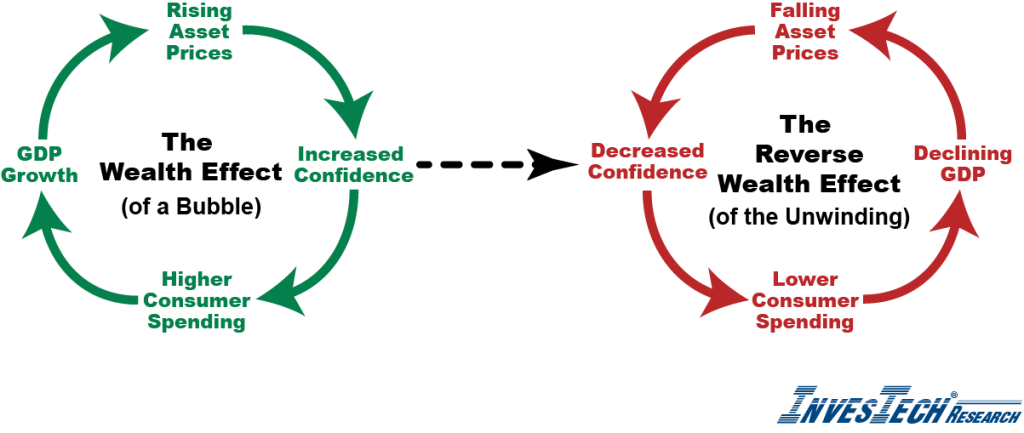
The preliminary Consumer Sentiment Report for October showed a drop to the lowest level on record for consumer assessments of Current Conditions. This means that at no point in the last 75 years have consumers felt worse about their current situation than they do today. A key theme in declining sentiment throughout the year has been rising prices and frustrations with the high cost-of-living.
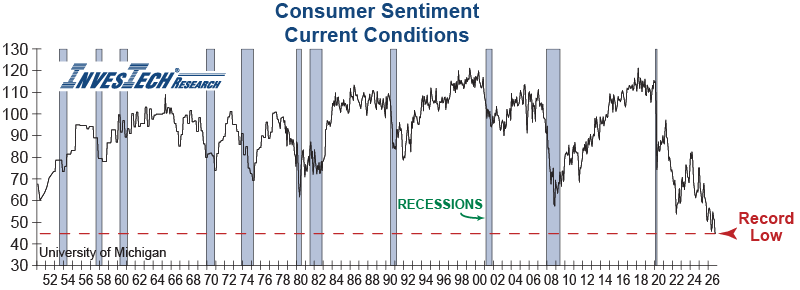
Under the hood, this development carries an even more ominous warning. Consumer Sentiment among households that own no stocks or fall in the bottom third (tercile) of stock ownership, has fallen approximately 25% so far this year. By contrast, Sentiment among households in the top two-thirds of stock ownership has had a far smaller decline.
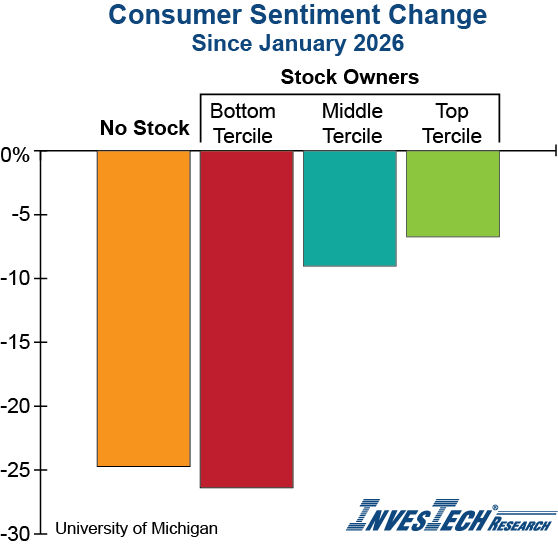
This dynamic can largely be attributed to the Wealth Effect. The Wealth Effect is the idea that people spend more money when they feel richer. This occurs when rising asset prices inspire a higher level of confidence among individuals who hold appreciating assets. Essentially, strong paper wealth (ex. rising stock portfolios) drives higher spending and Sentiment, even when available capital may not support it.
Currently, stockholders are relatively happy because they feel more insulated from the cost-of-living struggles pulling Sentiment lower. This also means any pullback in stocks could be the catalyst that breaks the cycle for the consumers who are still hanging on.